
Systems That Flow Correctly After Installation
Utility and Drainage Staking in Brownfield for underground infrastructure that depends on precise invert elevations and slope control
Underground utility systems for water, sewer, and storm drainage require invert elevations and horizontal alignments that allow gravity flow and prevent standing water inside pipes after installation crews backfill trenches and move to the next segment. Stake Tech Models provides utility and drainage staking for civil contractors, utility crews, and municipal infrastructure projects across Texas where slope errors cause costly rework and system failures that surface only after acceptance testing reveals flow problems. Accurate utility layout positions pipe segments, manhole structures, and service connections according to engineered profiles, reducing installation conflicts when multiple underground systems converge at intersections or building entries.
Utility staking translates design profiles into field-readable invert elevations, horizontal offsets, and structure positions that guide trenching equipment and pipe installation teams through sequential construction. Drainage staking establishes inlet locations, pipe slopes, and outfall elevations that determine whether storm systems remove runoff efficiently during rain events common across West Texas.
Request utility layout before excavation starts to confirm benchmark locations and verify control availability for trench operations.
Why Slope Control Works for Drainage Performance
Utility staking involves setting offset hubs with cut sheets that specify trench depths, pipe inverts, and slope grades at each station along alignment, allowing excavation operators to cut trenches and installation crews to position pipe segments without waiting for repeat elevation checks. Stake Tech Models establishes benchmark networks and transfers design inverts into field elevations using control points that remain accessible throughout trenching, bedding, pipe placement, and backfill operations across active jobsites.
Once utility staking is complete, trenching crews excavate to specified depths without guesswork, pipe installers maintain constant slope between manholes and structures, and inspectors verify installations match design profiles before backfill begins. Storm drainage systems move water from inlets to outfalls without ponding inside pipes, and sewer lines maintain minimum velocities that prevent solids accumulation and blockages during low-flow periods.
Staking services include offset marking for trench alignment, invert elevation control for gravity flow systems, structure positioning for manholes and catch basins, and coordination with civil engineers and project managers throughout installation phases. Support extends to water main installations, sanitary sewer construction, storm drainage networks, and underground utility coordination on commercial developments and infrastructure projects.
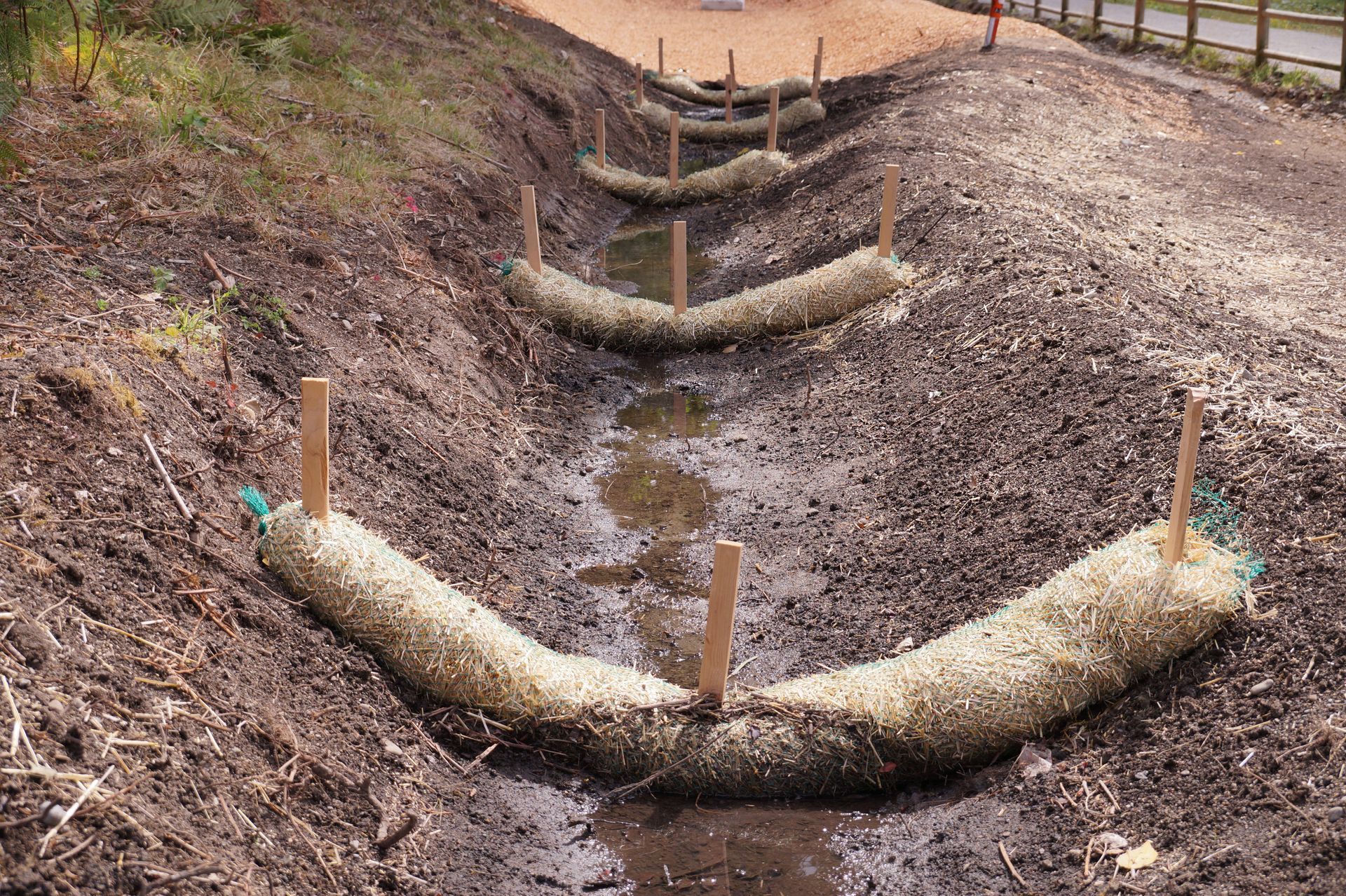
Common Questions About Utility Layout
Utility contractors managing tight tolerances and sequential trench operations across large sites typically ask about invert accuracy, offset methods, and elevation verification before excavation equipment mobilizes.
What does utility staking provide for drainage installations?
Staking includes offset hubs with cut sheets showing trench depth and pipe invert at each station, manhole and inlet positioning with rim and invert elevations, slope verification between structures, and benchmark references that support continuous elevation control throughout installation operations.
How do offset stakes help trenching crews maintain alignment?
Offset stakes are placed at measured distances outside trench limits, allowing excavation equipment to operate without destroying control while operators use string lines or laser systems tied to offset positions to verify trench centerline and depth as excavation progresses.
When does invert accuracy affect system performance?
Invert errors that create reverse slopes or flat sections cause water to pond inside pipes, reducing flow capacity and creating maintenance problems, while inverts set too low require excessive excavation and inverts set too high leave insufficient cover over pipes vulnerable to surface loads and temperature extremes.
Why does drainage staking matter during storm events in Brownfield?
West Texas receives intense rainfall that overwhelms undersized or improperly sloped drainage systems, and accurate staking ensures storm pipes maintain design slopes that move peak flows from inlets to outfalls without surcharging manholes or flooding pavement surfaces during heavy rain.
What field conditions affect utility staking schedules?
Existing utilities, rock excavation requirements, and groundwater levels influence trenching operations and staking timing, so layout coordination includes utility conflict verification and elevation adjustments that account for bedding thickness and pipe cover requirements across varying soil conditions.
Precise field layout supports efficient trenching and installation operations by delivering elevation control and alignment references that reduce costly rework caused by slope errors and positioning conflicts. Stake Tech Models coordinates utility staking with excavation schedules and installation timelines across Texas infrastructure projects—arrange your layout consultation to confirm invert requirements and offset methods before trenching begins.